Chocolate – (2"-3")
Variety: Chocolate. Offered size: (2"-3").
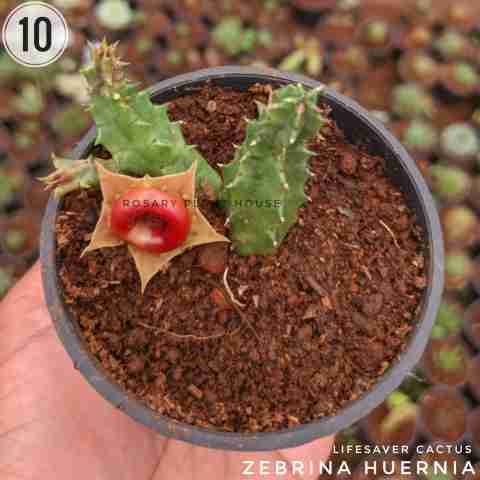
Price: Rs. 69 in stock
Quick answer
Treat Huernia zebrina as a warm-climate succulent that needs bright light, fast drainage, and limited watering. Avoid letting the stems sit wet, especially in monsoon weather.
Plant details and care
This plant is grown mainly for its unusual star-shaped flower with a bold central ring, a feature that gives it the name lifebelt or lifesaver cactus. Despite the common name, it is not a true cactus and has softer succulent stems with toothed ribs. It performs best in warmth, bright filtered light, and gritty soil that drains very quickly. In Indian weather the biggest care challenge is preventing root and stem rot during humid or rainy periods.
Plant profile
- Growth habit
- Low clumping stems
- Mature size
- Usually 8-15 cm tall with a spreading clump over time.
- Short description
- Huernia zebrina is a quirky stapeliad succulent with ribbed stems and the famous lifebuoy-shaped flower. It likes warmth, bright light, and quick drainage but dislikes staying wet for long.
Placement and light
- Sunlight
- Bright light with a little gentle sun or very bright filtered light.
- Best placement
- Covered bright balcony or airy east-facing window.
- Direct sun tolerance
- Limited; too much hard sun can scar the stems.
- Indoor suitability
- Yes, if the light is bright and the mix stays very airy.
- Balcony suitability
- Yes; best in covered balconies with no heavy rain exposure.
Watering by season
- Watering
- Water only after the soil dries well and never keep the roots soggy.
- Summer watering
- Every 5-7 days in a fast mix if the plant is actively growing.
- Monsoon watering
- Water minimally; this is the highest rot-risk season.
- Winter watering
- Light watering every 10-14 days if dry.
Soil, drainage and climate
- Soil
- Very gritty succulent mix with high mineral content.
- Pot/drainage
- Use a shallow pot with fast drainage and no waterlogging.
- Temperature
- Best around 18-34 C.
- Humidity
- Prefers lower humidity and strong airflow.
Maintenance and propagation
- Fertilizer
- Use weak cactus feed once a month in active growth only.
- Pruning
- Remove dead stems and spent flowers carefully.
- Repotting
- Repot every 1-2 years or when the clump fills the pot.
- Propagation
- Stem cuttings root well after callusing.
Seasonal care
- Summer care
- Keep it warm and bright, but do not let the roots remain saturated.
- Monsoon care
- Shelter from rain and drastically cut back watering to avoid rot.
- Winter care
- Keep bright and only lightly watered when the mix is dry.
India growing notes
- South India note
- Humidity control is very important for this stapeliad.
- North India note
- Give warmth and avoid cold wet soil in cooler months.
Common problems
Yellow leaves
Reason: Overwatering, low light, or older lower leaves aging naturally.
Solution: Let the potting mix dry appropriately, improve light gradually, and remove only fully spent leaves.
Leaf drop
Reason: Sudden stress from drought, overwatering, relocation, or strong afternoon sun.
Solution: Stabilize care, avoid frequent shifts, and return to a steady watering and light routine.
Soft stem
Reason: Stapeliad stems soften quickly when they stay wet too long.
Solution: Remove rotting parts immediately, dry the plant, and repot in a much grittier mix.
Wrinkled leaves
Reason: The plant is drawing on stored moisture after staying dry too long.
Solution: Water deeply, then allow the mix to dry to the right level before watering again.
Leggy growth
Reason: Insufficient light causes stretched stems and wider gaps between leaves.
Solution: Move the plant to brighter light slowly and trim or propagate stretched parts if needed.
Sunburn
Reason: Harsh direct sun after shade-grown conditions or strong summer afternoon exposure.
Solution: Shift to bright filtered light or gentler morning sun and acclimate the plant gradually.
Pests
Reason: Mealybugs, aphids, spider mites, or scale may appear when airflow and plant vigor are poor.
Solution: Isolate the plant, wipe pests away, and repeat neem oil or insecticidal soap treatments as needed.
Root rot
Reason: Roots stay wet too long in compact soil or a pot without drainage.
Solution: Trim damaged roots, repot into airy mix, and never let water stand around the root zone.
Recovery tips
- Recovery tips
- Trim dead growth, improve drainage and light, and resume care slowly rather than overcorrecting all at once.
Questions about Chocolate – (2"-3")
Is Lifesaver cactus a real cactus?
No, it is a stapeliad succulent, not a true cactus.
Why does it get soft so fast?
These stems rot quickly if the roots and base stay damp too long.
Can it flower in a small pot?
Yes, bright light and healthy growth can produce the famous flower.
Does it need strong sun?
Bright light is important, but harsh direct sun can damage the stems.
How do I propagate it?
Stem cuttings are the easiest method once the cut end has dried.
What is the biggest care mistake?
Overwatering in humid weather is the most common problem.