Finger Jade – (2"-3")
Variety: Finger Jade. Offered size: (2"-3").
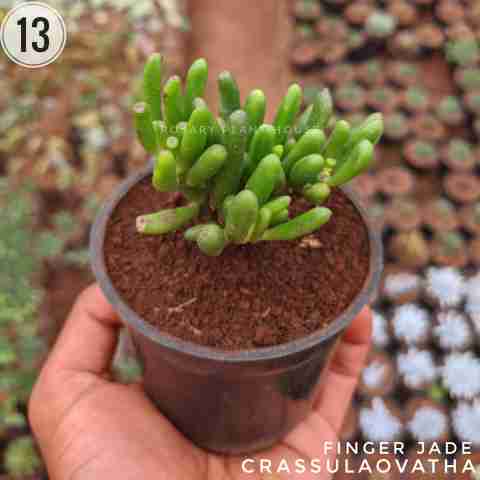
Price: Rs. 79 in stock
Quick answer
Treat Finger Jade like a bright-light succulent with fast-draining soil and restrained watering. The easiest way to damage it is to keep the roots wet too often.
Plant details and care
This jade cultivar is known for its tubular leaf shape, which makes it look very different from ordinary broad-leaved jade plants. It grows as a compact branching succulent and can gradually become a small woody shrub in a pot. The plant stores water in its leaves, so it should be watered only after the soil dries properly. In Indian growing conditions it is beginner-friendly if given bright light and protection from waterlogged monsoon soil.
Plant profile
- Growth habit
- Branching upright succulent
- Mature size
- Can eventually reach 30-60 cm in a container over time.
- Short description
- Finger Jade is a playful jade cultivar with tubular finger-like leaves and an easy branching habit. It handles bright indoor spots and sunny balconies well when the mix drains quickly.
Placement and light
- Sunlight
- Bright light with a few hours of direct morning sun.
- Best placement
- Sunny balcony, bright patio shelf, or strong indoor window light.
- Direct sun tolerance
- Good after acclimation; strong sun may add stress color on leaf tips.
- Indoor suitability
- Yes, near a bright window.
- Balcony suitability
- Yes; very suitable for bright balconies.
Watering by season
- Watering
- Water thoroughly, then wait until the mix has dried before watering again.
- Summer watering
- About every 5-7 days in active heat if the mix is airy.
- Monsoon watering
- Reduce watering sharply and avoid heavy rain exposure.
- Winter watering
- Every 10-14 days or as needed in bright light.
Soil, drainage and climate
- Soil
- Fast-draining succulent mix with grit or perlite.
- Pot/drainage
- Use a pot with drainage and avoid water collecting around the roots.
- Temperature
- Best around 15-34 C.
- Humidity
- Moderate humidity is manageable with airflow.
Maintenance and propagation
- Fertilizer
- Feed lightly once a month during active growth.
- Pruning
- Trim to shape or encourage denser branching.
- Repotting
- Repot every 2 years or when the pot becomes crowded.
- Propagation
- Stem cuttings root easily.
Seasonal care
- Summer care
- Bright light keeps the plant compact; avoid overwatering in heat.
- Monsoon care
- Use a very airy mix and protect from repeated rain soaking.
- Winter care
- Keep bright and water less often during slower growth.
India growing notes
- South India note
- Extra airflow and fast soil help in humid months.
- North India note
- Protect from cold wet conditions while using bright winter sun.
Common problems
Yellow leaves
Reason: Overwatering, low light, or older lower leaves aging naturally.
Solution: Let the potting mix dry appropriately, improve light gradually, and remove only fully spent leaves.
Leaf drop
Reason: Sudden stress from drought, overwatering, relocation, or strong afternoon sun.
Solution: Stabilize care, avoid frequent shifts, and return to a steady watering and light routine.
Soft stem
Reason: Stem or crown rot caused by excess moisture and poor drainage.
Solution: Remove damaged sections, repot into a fast-draining mix, and water less often.
Wrinkled leaves
Reason: The plant is drawing on stored moisture after staying dry too long.
Solution: Water deeply, then allow the mix to dry to the right level before watering again.
Leggy growth
Reason: Insufficient light causes stretched stems and wider gaps between leaves.
Solution: Move the plant to brighter light slowly and trim or propagate stretched parts if needed.
Sunburn
Reason: Harsh direct sun after shade-grown conditions or strong summer afternoon exposure.
Solution: Shift to bright filtered light or gentler morning sun and acclimate the plant gradually.
Pests
Reason: Mealybugs, aphids, spider mites, or scale may appear when airflow and plant vigor are poor.
Solution: Isolate the plant, wipe pests away, and repeat neem oil or insecticidal soap treatments as needed.
Root rot
Reason: Roots stay wet too long in compact soil or a pot without drainage.
Solution: Trim damaged roots, repot into airy mix, and never let water stand around the root zone.
Recovery tips
- Recovery tips
- Trim dead growth, improve drainage and light, and resume care slowly rather than overcorrecting all at once.
Questions about Finger Jade – (2"-3")
Is Finger Jade the same as regular jade plant?
It is a jade cultivar with tubular leaves rather than broad flat ones.
Why are the fingers getting soft?
Soft leaves usually point to overwatering or root stress.
Can I prune it?
Yes, it responds well to light pruning.
Does it need direct sun?
A little gentle direct sun helps keep it compact.
Can I propagate Finger Jade?
Yes, stem cuttings are very easy to root.
Why is the plant leaning?
Leaning often means it wants brighter light.