Common ivy – (2"-3")
Variety: Common ivy. Offered size: (2"-3").
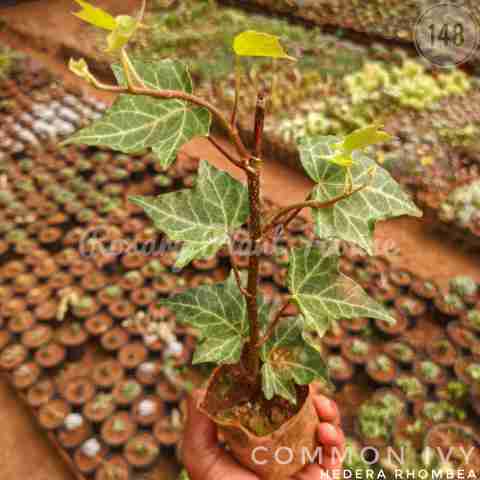
Price: Rs. 49 in stock
Quick answer
Keep Variegated English Ivy in bright filtered light with an airy potting mix. Water when the top layer starts to dry, but do not leave the pot waterlogged.
Plant details and care
Variegated English Ivy is best treated as a foliage-focused container plant rather than a drought-hardy desert succulent. These plants usually prefer brighter filtered light, more even moisture than cacti, and a root zone that never stays stagnant. In Indian homes, good airflow and controlled watering help the plant stay clean and compact. For home growers, the key care points are bright filtered light, steady drainage, and avoiding soggy soil.
Plant profile
- Growth habit
- Trailing or climbing vine
- Mature size
- Can trail or climb well beyond the pot.
- Short description
- Variegated English Ivy is grown mainly for its attractive leaves and compact pot habit. It prefers bright filtered light, steady drainage, and practical indoor or balcony care.
Placement and light
- Sunlight
- Bright filtered light or gentle morning sun.
- Best placement
- Bright indoor window, shaded balcony shelf, or airy covered patio.
- Direct sun tolerance
- Limited; harsh direct afternoon sun can scorch the foliage.
- Indoor suitability
- Yes; generally suitable in a bright indoor location.
- Balcony suitability
- Conditional; best in covered bright balconies.
Watering by season
- Watering
- Water when the top layer begins to dry, then let excess water drain away.
- Summer watering
- Usually every 3-5 days depending on heat, pot size, and airflow.
- Monsoon watering
- Reduce frequency and avoid heavy soggy soil.
- Winter watering
- Water a little less often if growth slows.
Soil, drainage and climate
- Soil
- Loose, airy potting mix with good drainage and some organic matter.
- Pot/drainage
- A drainage hole is important; never let the pot sit in stale water.
- Temperature
- Best around 18-32 C.
- Humidity
- Moderate humidity is usually welcome with good airflow.
Maintenance and propagation
- Fertilizer
- Use a weak balanced fertilizer during active growth.
- Pruning
- Trim damaged or untidy growth and remove old leaves as needed.
- Repotting
- Repot when rootbound or when the mix becomes compacted.
- Propagation
- Division, stem cuttings, or offsets depending on the plant.
Seasonal care
- Summer care
- Keep bright and airy, and avoid full drying for long periods unless the plant is succulent-like.
- Monsoon care
- Watch drainage closely and do not let the pot stay soggy.
- Winter care
- Keep bright and reduce watering slightly if growth slows.
India growing notes
- South India note
- Good airflow helps prevent fungal stress in warm humid weather.
- North India note
- Protect from very cold drafts and use bright winter light.
Common problems
Yellow leaves
Reason: Overwatering, low light, or older lower leaves aging naturally.
Solution: Let the potting mix dry appropriately, improve light gradually, and remove only fully spent leaves.
Leaf drop
Reason: Sudden stress from drought, overwatering, relocation, or strong afternoon sun.
Solution: Stabilize care, avoid frequent shifts, and return to a steady watering and light routine.
Soft stem
Reason: Stem or crown rot caused by excess moisture and poor drainage.
Solution: Remove damaged sections, repot into a fast-draining mix, and water less often.
Wrinkled leaves
Reason: The plant is drawing on stored moisture after staying dry too long.
Solution: Water deeply, then allow the mix to dry to the right level before watering again.
Leggy growth
Reason: Insufficient light causes stretched stems and wider gaps between leaves.
Solution: Move the plant to brighter light slowly and trim or propagate stretched parts if needed.
Sunburn
Reason: Harsh direct sun after shade-grown conditions or strong summer afternoon exposure.
Solution: Shift to bright filtered light or gentler morning sun and acclimate the plant gradually.
Pests
Reason: Mealybugs, aphids, spider mites, or scale may appear when airflow and plant vigor are poor.
Solution: Isolate the plant, wipe pests away, and repeat neem oil or insecticidal soap treatments as needed.
Root rot
Reason: Roots stay wet too long in compact soil or a pot without drainage.
Solution: Trim damaged roots, repot into airy mix, and never let water stand around the root zone.
Recovery tips
- Recovery tips
- Trim dead growth, improve drainage and light, and resume care slowly rather than overcorrecting all at once.
Questions about Common ivy – (2"-3")
Can Variegated English Ivy grow indoors?
Yes, if the plant gets bright filtered light and the pot drains well.
How often should I water Variegated English Ivy?
Water when the top layer begins to dry, but avoid constant sogginess.
Does Variegated English Ivy need direct sun?
Most decorative foliage plants do better in bright filtered light than in harsh afternoon sun.
Why are the leaves yellowing?
Overwatering, poor drainage, or too little light are common causes.
Can I keep Variegated English Ivy on a balcony?
Yes, if the balcony is bright, covered, and not too harshly exposed.
How do I propagate Variegated English Ivy?
Propagation depends on the plant, but cuttings or division are often used.