Opuntia Red – (2"-3")
Variety: Opuntia Red. Offered size: (2"-3").
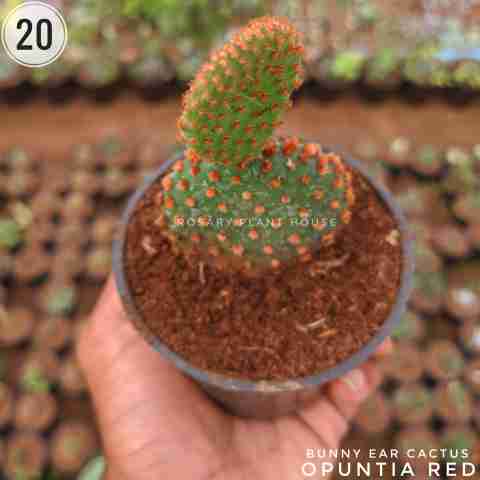
Price: Rs. 49 in stock
Quick answer
Grow Bunny Ear cactus in very bright light with a fast cactus mix, and water only when the soil dries well. Keep it drier in monsoon weather and handle the glochids carefully.
Plant details and care
This cactus is popular because the paired pads resemble rabbit ears when the plant is young. The orange dots are glochids, tiny irritating bristles, so handling should be careful even though the plant looks soft. It thrives in bright sun and a sharply draining cactus mix, especially when the pot never stays wet for long. In Indian climates it is generally easy if kept sunny and protected from nonstop monsoon rain.
Plant profile
- Growth habit
- Upright pad-forming
- Mature size
- Can reach 20-60 cm tall in pots over time with more pads.
- Short description
- Bunny Ear cactus is a playful opuntia with flat pads covered in orange glochids that look like soft dots from a distance. It likes strong light, quick drainage, and very restrained watering during humid weather.
Placement and light
- Sunlight
- Bright light to several hours of direct sun.
- Best placement
- Sunny balcony, terrace shelf, or bright south-facing window.
- Direct sun tolerance
- High once acclimated; it generally enjoys strong light.
- Indoor suitability
- Conditional; only in a very sunny window.
- Balcony suitability
- Yes; ideal for bright balconies or terraces with rain cover.
Watering by season
- Watering
- Water thoroughly, then let the cactus mix dry deeply before repeating.
- Summer watering
- Every 6-8 days in a gritty mix if the pot dries well.
- Monsoon watering
- Water very sparingly and keep the pot fully protected from prolonged rain.
- Winter watering
- Water lightly every 12-18 days or less in slow growth.
Soil, drainage and climate
- Soil
- Very fast-draining cactus mix with extra grit and mineral content.
- Pot/drainage
- Use a pot with strong drainage and no stagnant water.
- Temperature
- Best around 15-36 C.
- Humidity
- Prefers low humidity and open airflow.
Maintenance and propagation
- Fertilizer
- Feed lightly during active growth with diluted cactus fertilizer.
- Pruning
- Pruning is rarely needed; remove damaged pads with care.
- Repotting
- Repot every 2 years or when the cactus becomes top-heavy.
- Propagation
- Pads root easily after callusing.
Seasonal care
- Summer care
- Strong sun is fine, but increase exposure gradually if the plant was shade-grown.
- Monsoon care
- The main risk is wet soil, not lack of water, so keep it much drier.
- Winter care
- Bright light and very light watering are usually enough.
India growing notes
- South India note
- Humidity is manageable if the pot drains fast and rain is controlled.
- North India note
- Bright winter light is helpful, and cool dry conditions are usually tolerated well.
Common problems
Yellow leaves
Reason: Overwatering, low light, or older lower leaves aging naturally.
Solution: Let the potting mix dry appropriately, improve light gradually, and remove only fully spent leaves.
Leaf drop
Reason: Sudden stress from drought, overwatering, relocation, or strong afternoon sun.
Solution: Stabilize care, avoid frequent shifts, and return to a steady watering and light routine.
Soft stem
Reason: Stem or crown rot caused by excess moisture and poor drainage.
Solution: Remove damaged sections, repot into a fast-draining mix, and water less often.
Wrinkled leaves
Reason: The plant is drawing on stored moisture after staying dry too long.
Solution: Water deeply, then allow the mix to dry to the right level before watering again.
Leggy growth
Reason: Insufficient light causes stretched stems and wider gaps between leaves.
Solution: Move the plant to brighter light slowly and trim or propagate stretched parts if needed.
Sunburn
Reason: Harsh direct sun after shade-grown conditions or strong summer afternoon exposure.
Solution: Shift to bright filtered light or gentler morning sun and acclimate the plant gradually.
Pests
Reason: Scale and mealybugs can hide near pad joints if airflow is poor.
Solution: Inspect pad joints regularly and treat early with neem or insecticidal soap.
Root rot
Reason: Roots stay wet too long in compact soil or a pot without drainage.
Solution: Trim damaged roots, repot into airy mix, and never let water stand around the root zone.
Recovery tips
- Recovery tips
- Trim dead growth, improve drainage and light, and resume care slowly rather than overcorrecting all at once.
Questions about Opuntia Red – (2"-3")
Why is it called Bunny Ear cactus?
The young paired pads look like rabbit ears.
Are the orange dots harmless?
No, they are tiny glochids that can irritate the skin.
Can it stay indoors?
Only if the window gets strong direct sun.
How often should I water it?
Only after the cactus mix has dried deeply.
Can I propagate one pad?
Yes, a healthy pad can be rooted after callusing.
What is the biggest risk?
Overwatering and prolonged wet soil cause the most trouble.